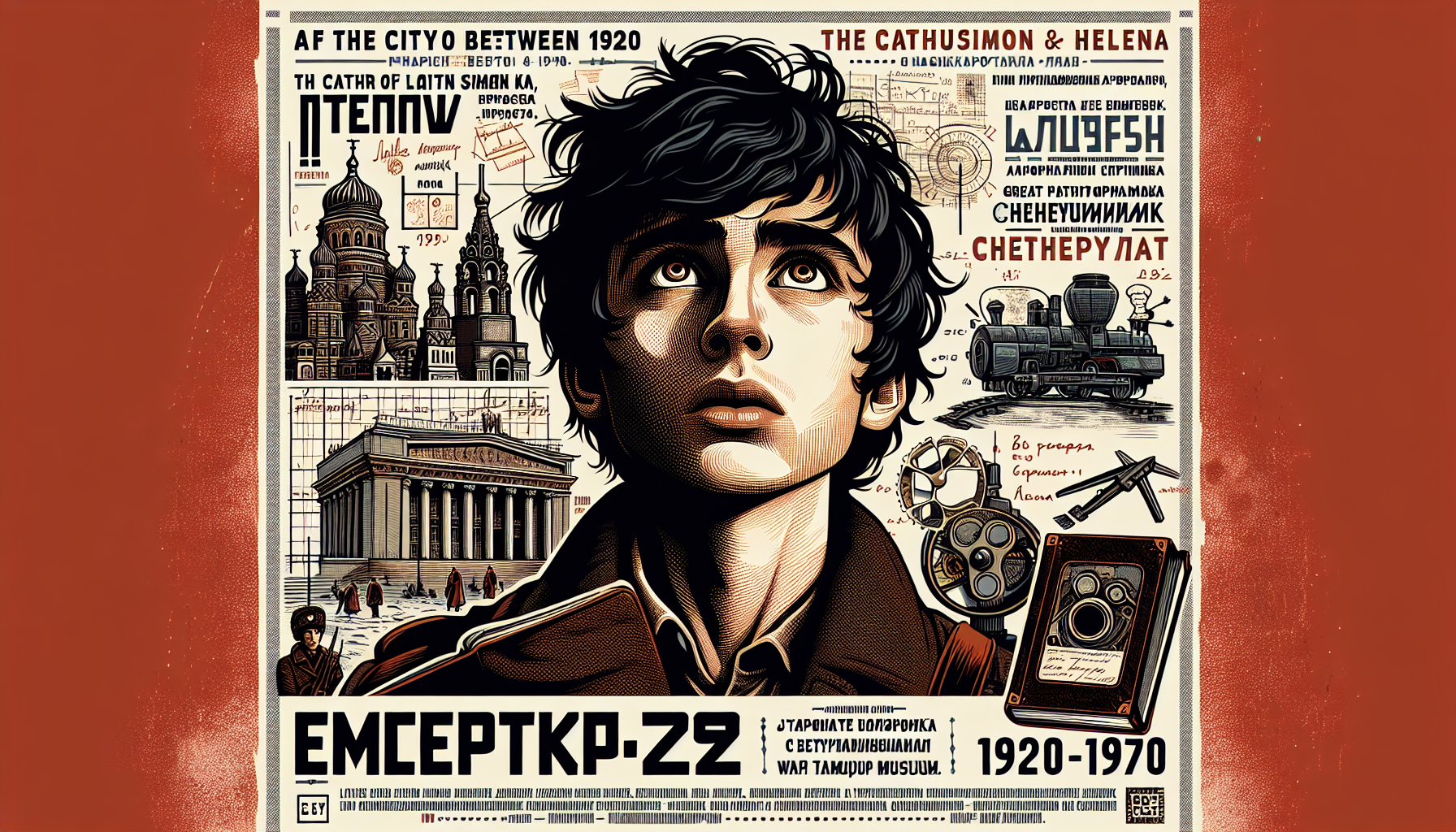
Litovka stirs awake beneath the rustling of leaves in Chelyuskintsev Park. I weave my way through ancient oaks, crossing paths where sunlight flickers like fleeting shadows over the damp earth. In my pocket, my sketchbook stirs—a silent keeper of an unfinished drawing: a small, yet vital piece for my latest mechanical creation.
My name is Arlen, a young inventor whose dreams stretch farther than his certainties, and this city is my workshop—a sanctuary for my restless mind.
Through the morning mist, the familiar outlines of Saint Simon and Saint Helena Cathedral rise, stooped yet steadfast against the pale Belarusian sky. It is more than stone and mortar to me; each block seems to hold murmurs of a past that, like my machines, spins endlessly—forgotten and reborn all at once.
I step into the Great Patriotic War Museum. I’m not after history frozen behind glass, but the raw, pulsing imprint clinging to the undiscovered. A guard casts me a steady glance, measuring the truth in my hurried steps, and I melt once more into the memories of steel and dust. Here, my newest idea took root: an automaton that could seize time itself—in movement, in memory.
Emerging, my sketchbook tucked beneath my arm, I cross the park again, allowing the city’s timeless creaks and whispers to unfold around me. I stop by a wooden bench, set down my burden, and begin piecing together the fragments of metal and springs I carry. Curious eyes flicker toward me like sparks feeding the fire of my focus.
Suddenly, a child appears behind a tree. Wide-eyed, watchful, the little one studies my work—a strange blend of old technology and nascent dreams. I return a smile, silently sharing how this automaton will cradle the breath of Litovka—the sounds, distant voices, even the faint scent of snow grazing the park’s edges.
With a gentle touch, I press an unseen, unexpected button. The automaton stirs—not with the roar of engines but with an organic dance drawn from a reverie. Its silent gears whisper echoes of the past, recreating the city’s forgotten heartbeat. I sense Litovka recognizing itself within this imperfect mechanism, in a gesture I have yet to fully unravel.
The child laughs in wonder and offers me a twig plucked from a nearby bush—a talisman of possibility. I wonder which of us appears stranger to the other: the child with untainted innocence, or me with a boundless curiosity refracted into parts and sketches.
In that instant, I realize this city lives nowhere on maps or postcards; it thrives in the hands that reinvent it, in the eyes that never cease seeking.
I pack the automaton away, the child fades into the distance, leaving trails of unspoken promise. I continue on, while Saint Simon and Saint Helena Cathedral watch over me. Our shadows intertwine, and with a freedom akin to my inventions, I press forward.
Litovka is not just my home or my muse—it is a workshop without walls, an open canvas where every corner hides the invisible energy of those who dream and create without end.
Perhaps tomorrow the city will whisper new truths, fresh intrigues, unknown mysteries. But today, here, between the museum, the park, and the cathedral, I know I need not travel far to discover an entire universe. All it takes is a curious mind, a sketchbook, and that elusive breath—hard to name—the mechanical spark that turns the most ordinary place into something extraordinary.


