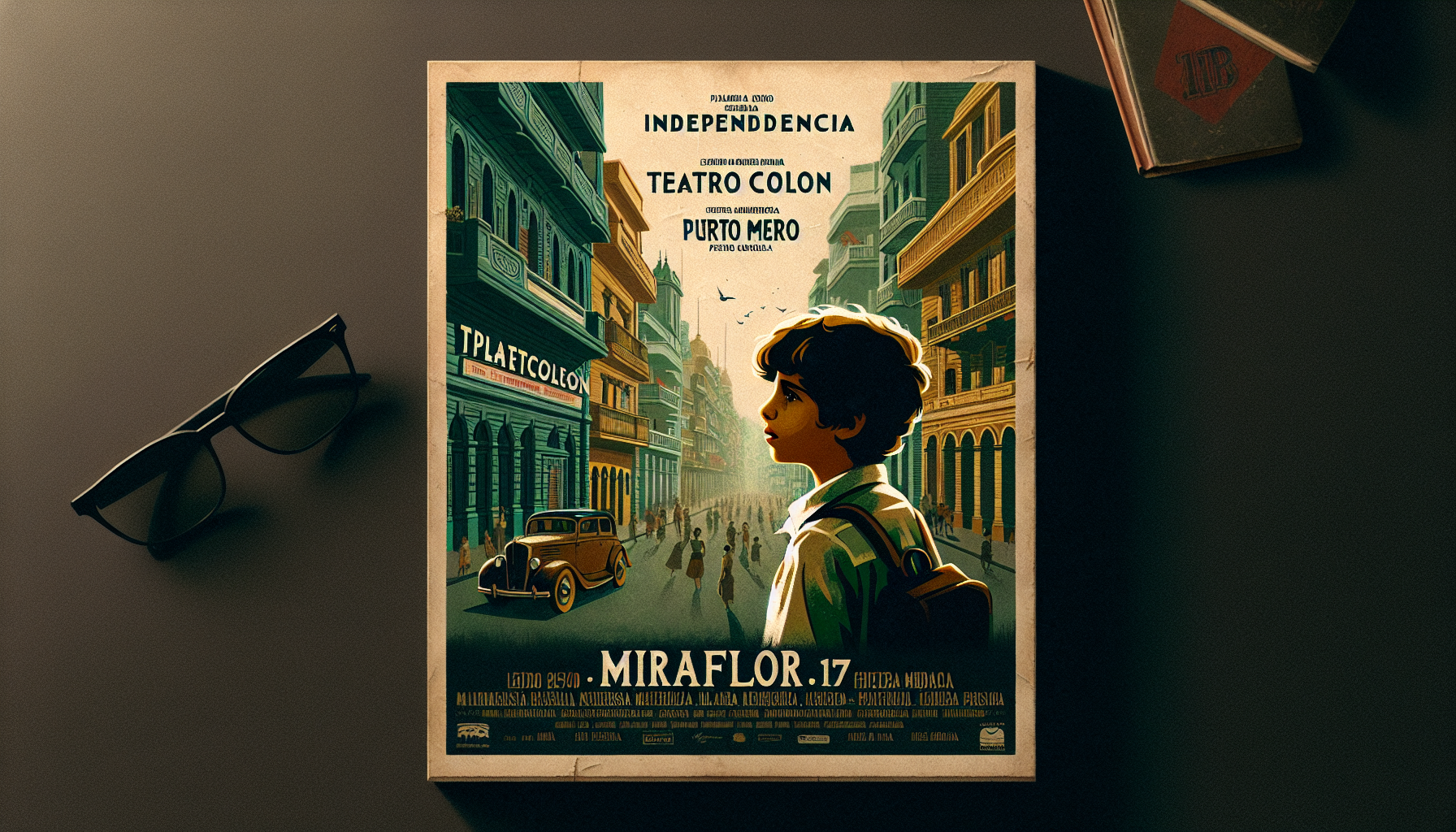
From the corner where Independencia Avenue meets San Martín Street, Independencia Square stretched before me like a map woven of whispers. Miraflor is no place to rush through; its streets twist and turn, labyrinthine paths waiting for someone willing to listen more than merely look.
I strolled along, notebook tucked under my arm, jotting down names, dates, fleeting sketches of lanterns, and the uneven cobblestones that seemed to murmur stories all their own. At seventeen, curiosity is a restless engine, fire that never asks permission. I had heard once that the Colón Theatre was Miraflor’s artistic heart, but that knowledge was just a half-open door—I longed to grasp the pulse beating beneath its velvet and wood.
Pausing before its façade, I admired the austere harmony of its classic columns, aware that countless souls had dreamed—and stumbled—under that stage’s light. Seeking another way in, I circled around via Bolívar Street. There, an old man swept slowly, as if trying to return the old leaves to the glow they once held.
“Do you know if the theatre offers guided tours?” I asked.
He smiled, answering before I finished.
“It’s not the theatre you need to know here, young man. It’s what lies locked inside its walls.”
His words echoed as I made my way to Puerto Madero, that stretch along the river’s edge. The silent docks bore witness to heart-wrenching farewells and hopeful returns. The breeze carried salt and the ghosts of stories ships never told.
There, outside a weathered shop turned café, I spotted the unexpected: a surprisingly fresh mural hidden among faded graffiti. Not a portrait of fame, but a woman with sharp eyes, staring at me with both challenge and kinship.
Without thinking, I traced an invisible line with my finger—her gaze linking to the entrance of the Colón Theatre. Then the sweeper’s words came back, and I felt that something in Miraflor was inviting me to follow this thread, to look beyond what was plainly seen.
Returning once more to Independencia Square, I crossed to a nearly forgotten corner where a small sculpture honored the old railway workers, guardians of a time unwilling to fade. There, an elderly woman sat on a bench, knitting softly while humming an ancient tune.
“Do you know about that painting near the port?” I asked.
Her eyes lit up, and she told me how the woman on the wall had once been a tango singer who lost her voice one harsh winter, yet whose spirit still lingers in every corner of Miraflor—defying oblivion.
Before I left, she pressed a rusty keychain into my hand, found among the rubble of an old station. “To open invisible doors,” she said, smiling in a way that made me understand: perhaps no one escapes Miraflor, even when they are walking away.
That night, I realized that travel is not meant to uncover monuments or pose for snapshots; it’s to encounter what watches for us in the shadows of time, to translate the voices vibrating beneath the cobblestones, to know a city can sometimes whisper its secrets to those who dare listen.
And I, without map or plan, set off knowing full well that tomorrow I would lose myself again—once more—in Miraflor.


