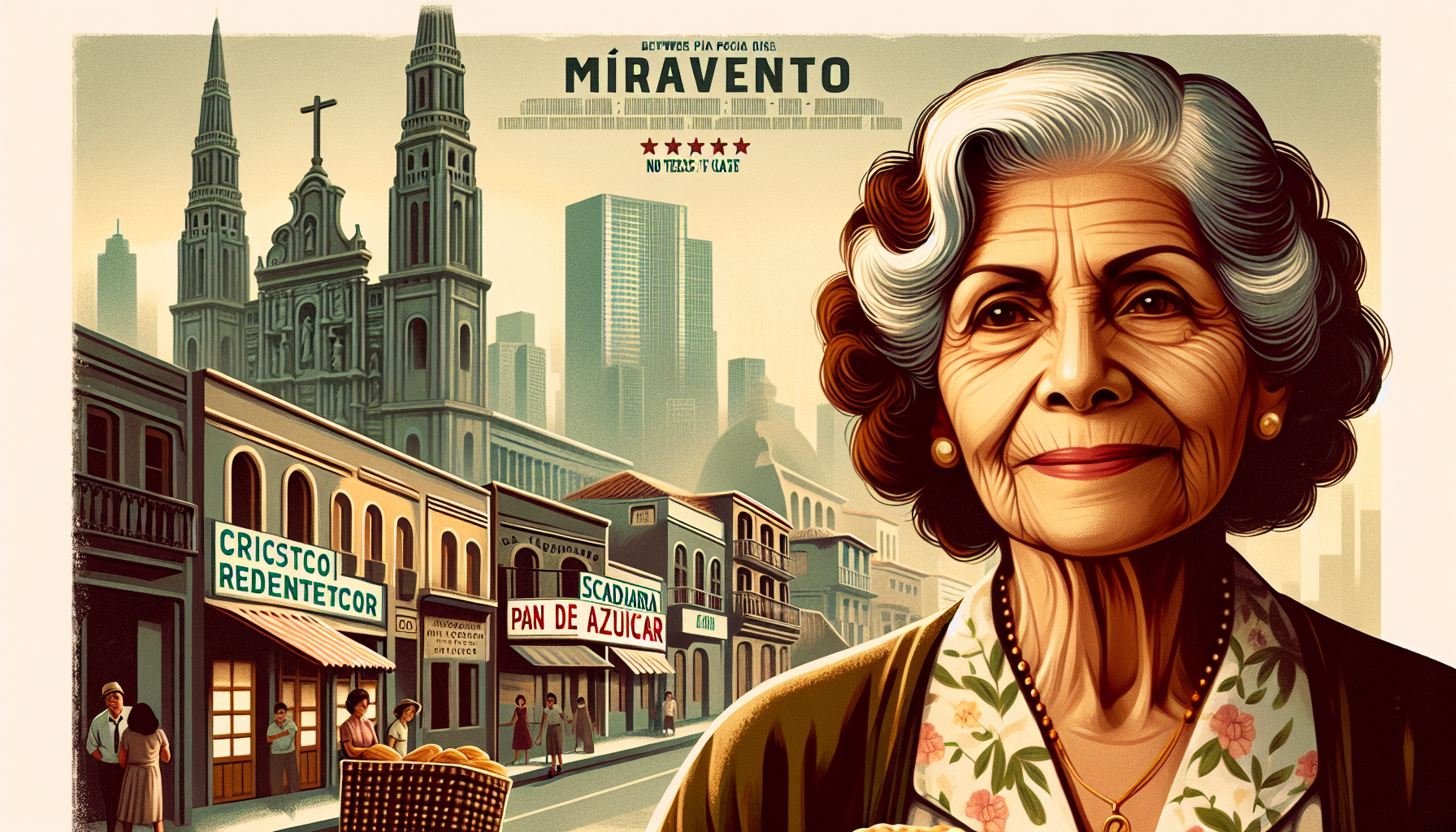
Each morning, from my window in Santa Teresa, I watch the Christ the Redeemer statue stand firm against a sky heavy with clouds—a silent sentinel witnessing secrets born and buried over time. My name is Lía, a retired history teacher, and for six decades I have wandered through Miravento, weaving stories that connect its people to who they were and who they still are.
Today, I chose to visit the Selarón Steps—not for the tourists or snapshots, but because those colorful tiles are pages of a living book. As I climbed each step, my thoughts drifted to Jorge, an old friend who once told me how this staircase was born from a solitary act of love and defiance. Within every shard of ceramic echoes the quiet yet vibrant voices of thousands of souls.
Sitting on a bench beside a mural depicting an ancient map of Miravento, I sensed a different kind of whisper—like the echo of the tales I have told so many times. A shy child approached and asked why I always spoke of times long past. I told him that the past breathes because it roots us when the city changes so swiftly. For him, knowing only modern skyscrapers, it was a captivating mystery.
I decided to take him with me to Sugarloaf—not the cable cars or cliché postcards, but the forgotten path winding through trees and rocks, where the city seems close yet belongs to another era. There, as we climbed, I spoke of the families who, in hard times, found refuge and shared dreams atop this very rock. The child gazed at the horizon where the sun pushed through the mist, at the place where sea and city seemed to merge.
At the summit, an unexpected discovery awaited. Beneath fallen leaves and moss, I found a small wooden box. Inside were yellowed letters and a notebook filled with drawings—each page telling Miravento’s story from the eyes of those absent from the history books. Stories of struggle, hidden loves, passions kept silent. The child and I read softly, as if coaxing forgotten voices back into the light.
I spoke to him about the invisible worth of the city—not just in its monuments, but in the breath of its alleyways, in the wind weaving through ancient stones. Miravento is more than a view to admire; it’s a tapestry of memories inviting us to look beyond the obvious.
On the way down, I thought of Jorge, who always said Miravento is an unfinished book, and we must listen to the forgotten voices to make them resonate—like that quiet box beneath Sugarloaf. Before parting, I whispered to the child that we don’t travel to escape, but to meet ourselves anew in stories still pulsing in the air.
Underneath my feet, Miravento lived on, with its secrets, its silences, and its promises. At my age, that is a gift no postcard can ever capture. It must be felt, seen with care, and remembered with tenderness.
Note: This story is a work of fiction. The places mentioned are real and can be visited.


